
"coffee tree growth"
6000 article(s) found
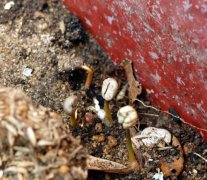
The growth process of coffee trees (photo group)
The bud that has just emerged looks like it is ready to bloom. The seed next to the beginning of the newborn life has already sprouted, two beautiful young leaves, the small bud next to it needs refueling, it will sprout and grow leaves soon. Now the bud is not high, it is estimated to be only five or six centimeters.
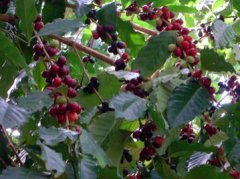
Basic knowledge of Coffee Coffee Tree Classification and growth picking period
Coffee tree belongs to the evergreen tree of Rubiaceae. Since ancient times, most of the plants of Rubiaceae are plants with special effects, such as quinine tree, which is regarded as a specific drug for malaria, and Dugan, which is used to treat amoeba dysentery. Coffee is defined as the most unique alkaloid drinking flora. The fruit of coffee consists of outer skin, pulp, endocarp, silver skin, and seeds (coffee beans) wrapped in the innermost layers mentioned above.

Coffee carving skills the growth environment and characteristics of coffee trees
Coffee beans are fresh and green coffee raw beans, which are obtained by removing red pulp, peel and silver skin from coffee fruit. The structure of coffee fruit is composed of outer skin, pulp, endocarp, silver skin and seeds. The shape is oval, usually the fruit of coffee is composed of two oval seeds opposite each other, and the other side is flat, so it is called flat bean, but it is also made up of

Where can coffee trees be planted in Yunnan under the coffee bean planting program?
There are mainly three kinds of coffee products in the business, and there are different categories under these three varieties. Arabica coffee (arabica) coffee is the most important and the best quality coffee beans, derived from esopian, is currently the most widely cultivated coffee. Liberica coffee comes from Rabindranath Basta (robusta) comes from fruit. The name of the latter indicates that it is rough.

Coffee trees from flowering to fruiting
Following caf é (Wechat official account vdailycom) found that Beautiful Cafe opened a small shop of its own when you tasted the freshly brewed coffee with those roasted coffee beans in your hand. Have you ever wondered what it would be like for a coffee bean to go from a seed sprinkled on the soil to sunbathing on a coffee tree to becoming a ripe fruit without its mother?

Income of coffee farmers grown in shade coffee tree Arabica coffee beans
First of all, there are some reasons why shade planting has become an advantage. When coffee is planted in the shade of other vegetation, biodiversity provides favorable conditions for its growth. Native plants that provide shade for coffee range from forest plants such as cedar to fruit trees such as banana, orange, lemon, avocado and litchi.

How many varieties of coffee are grown in Taiwan?
However, due to different climate, soil and other conditions, the growth of coffee in Zhaoqing encountered many problems. Mr. Lin, the manager of the coffee farm, told reporters that the coffee tree is not resistant to strong light and needs proper shade. If the light is too strong, it will inhibit its growth. Unlike the environment in which coffee trees are planted in Taiwan, it is an all-sunshine environment, and strong light may cause coffee flowers.
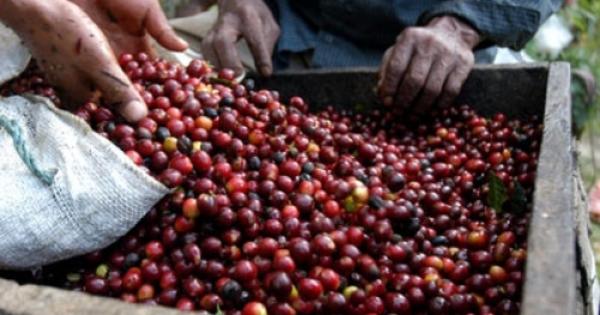
Conditions for planting coffee trees what is the growing environment of coffee trees?
Coffee belt: coffee can not be grown in any environment, because it is originally a plant growing in a tropical rain forest, and in phylogeny, it forms the habit of calm wind, cool, shaded or semi-shaded and humid environment. We call the strips on both sides of the equator between latitudes 25 degrees south and north suitable for the growth of coffee trees as coffee belts. Temperature: the requirements for temperature vary with the species of cultivation

Environmental requirements for growing Coffee in Coffee Farm in India
Coffee planting conditions and distribution 1. What is coffee? Coffee (Coffee) is derived from the Latin word Coffea (biological word name) and belongs to a member of the Rubiaceae family. These plants are all woody plants, most of which are distributed in the tropics, with more than 500 classifications and about 6000 varieties. Most of the Coffea plants are tropical 5-6 meters high.

Introduction to the planting technology of coffee the planting conditions and distribution of coffee
Coffee planting conditions and distribution 1. What is coffee? Coffee (Coffee) is derived from the Latin word Coffea (biological word name) and belongs to a member of the Rubiaceae family. These plants are all woody plants, most of which are distributed in the tropics, with more than 500 classifications and about 6000 varieties. Most of the Coffea plants are tropical 5-6 meters high.

How much do you know about the growing conditions and distribution of coffee
Coffee planting conditions and distribution 1. What is coffee? Coffee (Coffee) is derived from the Latin word Coffea (biological word name) and belongs to a member of the Rubiaceae family. These plants are all woody plants, most of which are distributed in the tropics, with more than 500 classifications and about 6000 varieties. Most of the Coffea plants are tropical evergreen bushes 5-6 meters high.
Coffee knowledge Coffee growth cycle and picking
Coffee beans are the seeds of coffee trees. After three or four years of growth, the coffee tree matures and begins to bear fruit, with one fruit arranged in clusters or clusters along the branches. The outside of the seed is a layer of peel, which can be picked as soon as it turns red. Under the red skin (exocarp) there is a layer of pulp (mesocarp), which is a small thin layer, and then a layer of material endocarp like parchment. In

Introduction of high-quality coffee trees in Bolivia with slow growth and sufficient compactness.
Bolivia's high-quality estates, very high altitude, perennial low temperature environment, so that coffee fruit growth is slow, tight enough, aroma is also charming, floral aroma is obvious, such as careful handling, cherries with the same maturity, often have a clean and meticulous high-end taste, this elegant vanilla and honey aromas are very attractive, this champion bean has a variety of floral aromas, vanilla and sweet very long-lasting. To
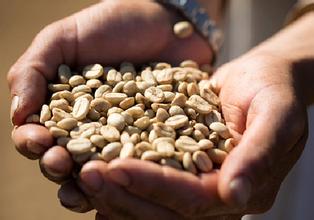
Introduction to the growth environment of fine coffee, raw beans, coffee, cherries, coffee beans
Raw coffee beans are the seeds of coffee trees. It is the wealth hidden in coffee cherries (coffee berries) that people usually call coffee cherries. They are mistakenly called beans because they are similar to the beans we usually see, but they are actually the seeds of coffee. Usually there are two flat oval coffee beans in the coffee berries, and there is only one in a few coffee berries.

Coffee theory study: coffee plant classification, cultivation and processing
Many people are familiar with coffee powder, but coffee powder is formed after coffee beans are ground. The coffee beans that ordinary customers get are fried (roasted) coffee beans, while coffee beans that have not been roasted are green coffee beans. If you dig deeper, coffee beans come from coffee berries on coffee trees, which are the seeds of coffee trees. So to understand coffee beans, first you have to understand coffee.

World Coffee boutique Manor: Martinique Martinique witnessing the growth and destruction of Coffee
Martinique is a small island and the birthplace of coffee in Central America, but it produces very little coffee today. The first coffee tree in the Western Hemisphere was brought from France by Gabriel Mathieu de Clieu in the early 1820s. In his early years, Dirkley was a naval officer in Martinique. He brought back a coffee tree and planted it in Puri.

The basic knowledge of Coffee-Coffee growth habits
Coffee trees belong to the evergreen family of Akanaceae. They are tropical plants that are not cold. Most of them are planted in areas with elevations of 300,400m, and also in highlands with elevations of 2000-2500 meters. But those who plant on slopes above 1500 meters above sea level have better quality. Coffee trees are most suitable for growth when the average temperature is about 20 degrees Celsius, the annual precipitation is 1500-2000 mm, and the soil is permeable.
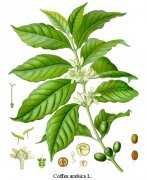
Coffee cultivation techniques detailed explanation of planting knowledge of Coffee trees
Coffee, cocoa and tea are called the three major beverages in the world, and their output, consumption and output value all rank first. In addition to being used as a beverage, coffee can also extract caffeine and coffee oil; in medicine, it can be used as an anesthetic, stimulant and diuretic cardiotonic agent. Coffee pulp can be used to make wine, vinegar, pectin and molasses; dried pulp can be used as animal feed; dried fruit shell can be used as fertilizer and burning

The growth cycle and picking of high-quality coffee
Coffee beans are the seeds of coffee trees. After three or four years of growth, the coffee tree matures and begins to bear fruit, with one fruit arranged in clusters or clusters along the branches. The outside of the seed is a layer of peel, which can be picked as soon as it turns red. Under the red skin (exocarp) there is a layer of pulp (mesocarp), which is a small thin layer, and then a layer of material endocarp like parchment. In

The flowering cycle of coffee is several months-the growth cycle of Brazilian coffee.
Coffee flowering cycle for several months-Brazilian coffee growth cycle coffee tree flowering from February to May, blooming constantly. Bear fruit after anthesis. The fruit is green. No artificial pollination is needed. Every March, the branches of the coffee tree will appear white flowers, petals arranged in a spiral, the heart of the flowers jumping around the petals, take a closer look, it is really like a small windmill playing in childhood, emitting bursts of jasmine fragrance; fruit